


WHAT IS GST?
GST i.e.Goods and Service Tax is a unified tax that replaces several indirect taxesleviedby the Central Government and the State Government(s)....
Read more
|
07/2010-Cus, Dated: 23/03/20010
CIRCULAR NO. 7/2010-CUSTOMS
F.No.609/121/2007-DBK
Government of India
Ministry of Finance
Department of Revenue
Central Board of Excise & Customs
******
New Delhi, the 23rd of March, 2010
To
All Chief Commissioners of Customs/Central Excise/Customs & Central Excise.
All Commissioners of Customs/Customs (P)/Customs & Central Excise /Central Excise.
All Director Generals of CBEC,
Chief Departmental Representative of Customs Excise & Service Tax Appellate Tribunal.
Sub: Recovery of drawback amount on the portion of the FOB value of export not realized by the exporter but compensated by ECGC - reg.
--------
Sir/Madam,
I am directed to say that payment of duty drawback is governed by provisions of section 75 of the Customs Act, 1962 and the rules made there under. Section 75 of the Customs Act provides that where any drawback has been allowed on any goods and the sale proceeds in respect of such goods are not realized within the time allowed under the Foreign Exchange Management Act, 1999 such drawback shall be deemed never to have been allowed and the Central Government may, by Rules made under section 75 (2), specify the procedure for the recovery of the amount of such drawback. A procedure has also been laid down under the Customs, Central Excise and Service Tax Drawback Rules, 1995 for recovery of drawback in case of non-realization of export proceeds. Therefore, the amount of drawback paid in all such cases where export proceeds have not been realized has to be recovered.
2. However, it has been brought to notice of the Board that some exporters are resisting recovery of drawback in cases where export proceeds have not been realized citing provisions in Handbook of Procedure (HBP) (Vol.1) of the Foreign Trade Policy (FTP) discussed below.
3. Para 2.25.1 of the Handbook of Procedure (HBP) (Vol.1) of the Foreign Trade Policy (FTP) 2009–2014 provides that payment through ECGC cover would count for benefits under FTP. The FTP 2004-09 (Para 2.25.1 of the HBP v.1) and the FTP 2002–2007 (Para 2.25.3 of the HBP v.1) also had the same provision. The DGFT vide Policy Circular No.12/2002-2007 dated 1.11.2002 had clarified that this provision would also be applicable to exports made or licenses issued prior to 01.4.2002.
4. Further, a new provision has been made in the current FTP (Para 2.25.4 of the HBP v.1, 2009-14) which provides that realization of export proceeds shall not be insisted under any of the Export Promotion Schemes under the Foreign Trade Policy, if the Reserve Bank of India (RBI) writes off the requirement of realization of export proceeds on merits and the exporter produces a certificate from the concerned foreign Mission of India about the fact of non-recovery of export proceeds from the buyer. However, this would not be applicable in self-write off cases.
5. Since the Drawback scheme is governed by the provisions of the Customs Act, 1962 and the Rules made there under which clearly provide that drawback should be recovered if sale proceeds have not been realized, it is hereby clarified that provisions contained in para 2.25.1 and 2.25.4 of the HBP v.1 (2009-14) would not be applicable to the Drawback scheme. Hence, ‘Drawback’ would not be payable in cases where export proceeds have not been realised in accordance with the provisions of the Foreign Exchange Management Act, 1999 even if the claim has been settled by ECGC or realisation waived by RBI. Action should be taken for recovery of drawback amount in such cases.
6. A suitable Public Notice and Standing Order may be issued for the guidance of the trade and staff. Difficulties faced, if any, in implementation of the Circular may be brought to the notice of the Board at an early date.
Receipt of the Circular may kindly be acknowledged.
Yours faithfully,
(Pramod Kumar)
Technical officer (Drawback
|
GST i.e.Goods and Service Tax is a unified tax that replaces several indirect taxesleviedby the Central Government and the State Government(s)....
Read more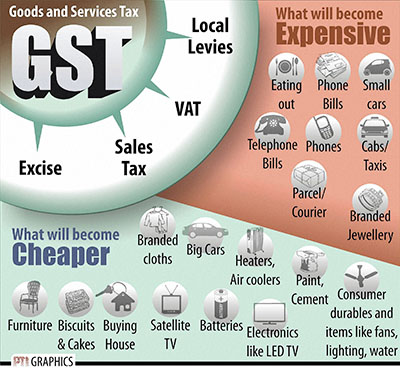
In pre-GST regime, goodswere liable to: (i) Excise Duty- on manufacture of goods; (ii) VAT/CST- on sale of goods; (iii) Entry tax- on ...
Read more
GST is levied on every taxable person. Taxable person means a person who carries on any business at any place in India. Such . ..
Read more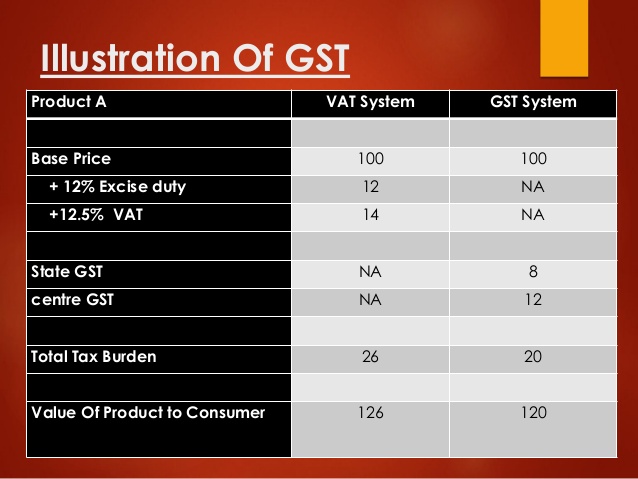
GST is a unified tax which is levied on: (i) goods; (ii) services and (iii) a mix of goods and/or services. Any supply of goods or services . .. ...
Read moreGST India Solution is an effort of firm of professionals who welcome implementation of GST. This is an interactiveplatformthat aspires to disseminate right knowledge to professionals, practitioners and public at large. This platform has beenfloatedbya firm of Chartered Accountants relentlessly working in field of direct and indirect taxes since early 1985.
READ MORE
Our core competence is statutory compliance, advisory, corporate tax planning and appellate matters of direct and indirect taxesandcorporate training sessions on GST.
The senior partner of the firm has to his credit several professional publications viz., Delhi Sales Tax Right to Use Goods Act, Delhi VAT, Maharashtra VAT, West Bengal VAT, Haryana VAT published by Taxmann. Madhya Pradesh VAT and Chhattisgarh VAT were published by Suvidha Law House, Bhopal. He has also addressed seminars on indirect taxes organized by professional bodies like ICAI, IMA, NIFM etc. and has also contributed articles on subjects of pro. . . . .
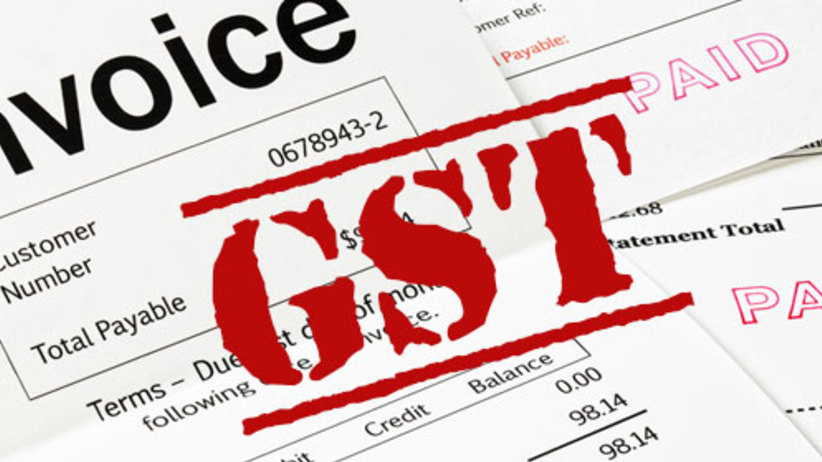
From 9th January 2017, the GST enrollment for service tax assessee shall start and which needs to be completed within a month till 31st January 2017.
read more
The existing taxpayers will have to get themselves enrol / register / migrate under Goods and Services Tax (GST) System in the month of November itself.
read more
If you are an existing taxpayer registered under Excise, Service Tax and State Tax Laws such as VAT, Entry Tax, Luxury Tax and Entertainment Tax, then you will need to enroll for GST online.
read more
It is very important to understand the registration procedure under GST because even the existing dealer will also have to apply for the GST registration online.
read more
GST is now a reality, and it is knocking the doors. This article answers the most important question which is in every bodies mind that who all are liable to register under GST?
read more
This article explains the importance of service tax registration when GST is on the doorstep. Under GST, every person being a service provider, a dealer, trader, manufacturer, Exporter, Importer etc will have to apply for GST registration.
read more
This article explains the registration process under the new Goods and Service Tax (GST) Act, 2016. The whole process under GST regime is also online. The structure of GSTTIN is also explained in this article
read more
This articles describes the documents required for GST registration in India. The list of documents required for each form of business has been listed down separately for better clarity.
read more