

Ask a Query


Client Login

Welcome GST India Solution


CIRCULAR No. 24/2009-Customs
 
Dated: September 3, 2009
 
Sub:- Misuse of circular No.74/2002-Cus dated 8th November, 2002 – reg.
 
I am directed to invite your kind attention to the Board’s circular No.74/2002-Cus dated 8.11.2002. The said circular clarified that if the buyer and the seller have contracted goods on f.o.b. basis and the same is reflected in the contract and the Letter of Credit (LC), it is immaterial that the exporter has actually shipped the goods by air. The circular further stated that if the freight is on collect basis and the exporter is paying more as air freight due to the exigency of the situation without affecting the f.o.b., it would not be justified to rework the drawback amount by deducting freight element from the contracted FOB value.
2. The circular was issued when it was brought to the notice of the Board by some field formations in 2002 that a few exporters had claimed drawback on export value which included air freight. This happened because although the exporters were required to send their goods by sea as per contract and the freight was to be borne by the buyer, they actually sent the goods by air and incurred the air freight. The exporters later claimed drawback on the entire FOB value which included the freight element also. The Apparel Export Promotion Council (AEPC), however, represented to the Board that the exporters were compelled to ship the goods by air in order to meet the delivery deadlines lest the buyers should cancel the export orders. Such delivery of cargo by air did not affect the FOB value which was a constant in terms of the contract between the exporters and the foreign buyers. The Board accepted this reasoning and issued the aforementioned circular.
3. The Board was recently informed by a field formation that as per intelligence received by them some exporters have claimed benefit of the aforementioned circular in as much as 44% of their total consignments in a year. These exporters had paid freight charges even though the contract was on FOB basis. It was, therefore, decided to review the circular.
4. The AEPC has again represented that the operations involved in garment export trade are complex and involve lot of manual work. In the process, delays take place forcing exporters to agree to the conditions dictated by buyers to bear air freight. Such instances occur occasionally but in not more than 2-3% of shipments of any exporter. While action may be taken against exporters who misuse provisions of law, all exporters should not be measured with the same yardstick. AEPC has requested that the field formations may be advised to grant drawback to the exporters in such exigencies and circular No. 74/2002-Cus re-clarified to them by the Board. The Ministry of Textiles has also supported the view of AEPC.
5. The issue has been re-examined by the Board. It is felt that the situations of exigencies as envisaged in the above mentioned circular where exporter is forced to ship the goods by air at his expense even though the contract is on f.o.b. basis will continue to arise and needs to be provided for so that the exporters do not suffer dual disadvantage of bearing extra expense of air freight and also losing the drawback amount. However, at the same time this facility can not be allowed to be misused.
6. In view of the above, it is clarified that in situations where the buyer and the exporter have contracted the goods on f.o.b. basis and the same is reflected in the contract and the LC, but the exporter is forced to send the goods by air at his own expense due to an exigency such as contractual obligation to deliver the goods within a certain period of time, it would not be justified to rework the drawback amount by deducting freight element from the contracted FOB value. However, in order to obviate misuse and as informed by the AEPC the benefit of this circular shall be limited to only 3% of the shipments in a financial year.
7. The following procedure shall however be followed for availing this facility. The exporters who intend to take the benefit of this circular should declare the fact of exigency upfront to Assistant Commissioner / Deputy Commissioner (Drawback), before filing the Shipping Bills. Such declarations should, inter alia, give the details regarding the nature of exigency, number of consignments exported during the year from all the ports and the number of consignments in which the benefit of this Circular has been claimed. The Assistant Commissioner / Deputy Commissioner will satisfy himself about the bona fides of the case and take a decision in the matter. In the meantime, however, the Shipping Bill will be permitted to be filed, processed and the export shipment cleared like any other drawback shipment. It may be noted that the export shipment will, in no case, be stopped. The Assistant Commissioner/Deputy Commissioner will take a decision in the matter keeping in mind the upper limit of 3% prescribed for such cases of exigency and as far as possible, before the shipping bill comes to the Drawback queue so that the drawback can be sanctioned without delay. In case of any dispute, the drawback shall be released after deducting airfreight element from the contracted FOB value. The bonafides of the exigent situation shall be examined later and the decision on the balance drawback i.e. drawback on the amount deducted from the FOB value shall be communicated through a speaking order. The exporters shall not be required to file supplementary claims for the differential amount in such cases.
8. The pending cases pertaining to exports under circular No.74/2002-Cus dated 08.11.2002 may be finalized keeping in view the above guidelines.
9. A suitable Public Notice for information of the Trade and Standing Order for guidance of the staff may be issued. Difficulties faced, if any in implementation of the changes may be brought to the notice of the Board at the earliest.
Kindly acknowledge receipt of this Circular.
F.No.609/09/2008-DBK
(PRAMOD KUMAR)
TECHNICAL OFFICER (DRAWBACK)


Latest Articles

<--

WHAT IS GST?

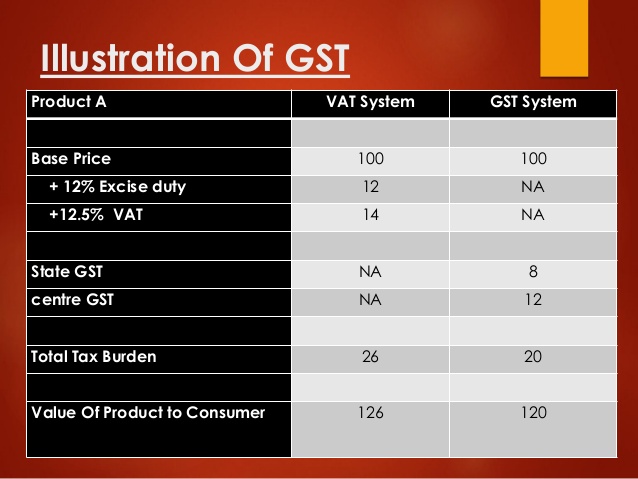
GST i.e.Goods and Service Tax is a unified tax that replaces several indirect taxesleviedby the Central Government and the State Government(s)....

Read more

-->

BASIS OF CHARGE OF GST- SUPPLY

In pre-GST regime, goodswere liable to: (i) Excise Duty- on manufacture of goods; (ii) VAT/CST- on sale of goods; (iii) Entry tax- on ...

Read more

WHO IS LIABLE TO PAY TAX

GST is levied on every taxable person. Taxable person means a person who carries on any business at any place in India. Such . ..

Read more
WHAT IS TAXED UNDER GST

GST is a unified tax which is levied on: (i) goods; (ii) services and (iii) a mix of goods and/or services. Any supply of goods or services . .. ...

Read more

Who We Are

GST India Solution is an effort of firm of professionals who welcome implementation of GST. This is an interactiveplatformthat aspires to disseminate right knowledge to professionals, practitioners and public at large. This platform has beenfloatedbya firm of Chartered Accountants relentlessly working in field of direct and indirect taxes since early 1985.

READ MORE

Why

Goods & Service Tax


Our core competence is statutory compliance, advisory, corporate tax planning and appellate matters of direct and indirect taxesandcorporate training sessions on GST.

The senior partner of the firm has to his credit several professional publications viz., Delhi Sales Tax  Right to Use Goods Act, Delhi VAT, Maharashtra VAT, West Bengal VAT, Haryana VAT published by Taxmann. Madhya Pradesh VAT and Chhattisgarh VAT were published by Suvidha Law House, Bhopal. He has also addressed seminars on indirect taxes organized by professional bodies like ICAI, IMA, NIFM etc. and has also contributed articles on subjects of pro. . . . .
READ MORE

Gst Events