


WHAT IS GST?
GST i.e.Goods and Service Tax is a unified tax that replaces several indirect taxesleviedby the Central Government and the State Government(s)....
Read more
|
Circular No. 22/2009-Cus
F.No.:DGEP/EOU/57/2009
Govt. of India Ministry of Finance Department of Revenue Central Board of Excise & Customs Directorate General of Export Promotion Sub: Use of duty free raw material for capital goods manufactured within EOU for captive use-reg.
An Export Oriented Unit has represented regarding difficulties faced in grant of exemption from Customs & Central Excise duty on raw materials common for manufacture of both finished goods and capital goods (e.g. jigs, moulds, dies etc) within the EOU for captive use.
2. The issue has been examined. It is viewed that there may not be any difficulty in allowing duty free import/domestic procurement of raw materials common for the manufacture/production of finished goods as well as for the manufacture of capital goods for use within the unit. The usage of inputs, imported or procured domestically, for manufacture of finished goods is allowed as per Standard Input Output norms (SION) [condition (d) (I) (ii) of opening paragraph of notification No. 52/2003-Cus dated 31.03.2003].
3. Raw materials for making capital goods for use within the unit is allowed vide Sl. No. 16 of Annexure-I of notification No. 52/2003-Cus dated 31.03.2003. Capital goods manufactured out of duty free inputs for use within the EOU are required to be accounted for and bonded as per the usual bonding procedure. While following the into-bond procedure, the value of such capital goods woud be assessed by following the computed value method in terms of the Customs valuation Rules, which would inter alia account for the raw material captively consumed in manufacture of capital goods. Such goods would be liable to duty as applicable in case of clearance outside the unit or debonding or exit from EOU scheme. Exemption from payment of duty of excise leviable under section 3 of the Central Excise Act, 1944 vide notification No. 24/2003-CE dated 31.03.2003 shall not be applicable in such cases.
4. Hence, it is clarified that the capital goods manufactured for captive use should be accounted & bonded by following the usual procedure and shall be liable for payment of duty while making clearances outside the unit or debonding or exit from the EOU scheme.
5. This issues with the approval of Central Board of Excise & Customs.
6. Wide publicity may please be given to these instructions by way of issuance of Public/Trade Notice. Difficulties, if any, in implementation of these instructions, may be brought to the notice of the Directorate General of Export Promotion.
7. Receipt of this circular may kindly be acknowledged. .
Yours faithfully
(Praveen Mahajan)
Director General |
GST i.e.Goods and Service Tax is a unified tax that replaces several indirect taxesleviedby the Central Government and the State Government(s)....
Read more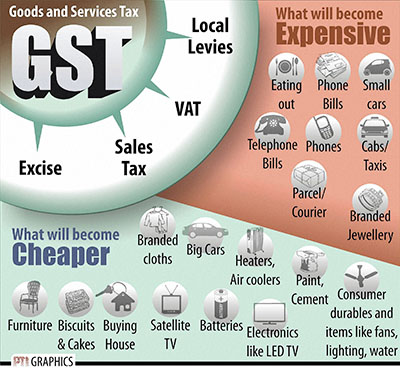
In pre-GST regime, goodswere liable to: (i) Excise Duty- on manufacture of goods; (ii) VAT/CST- on sale of goods; (iii) Entry tax- on ...
Read more
GST is levied on every taxable person. Taxable person means a person who carries on any business at any place in India. Such . ..
Read more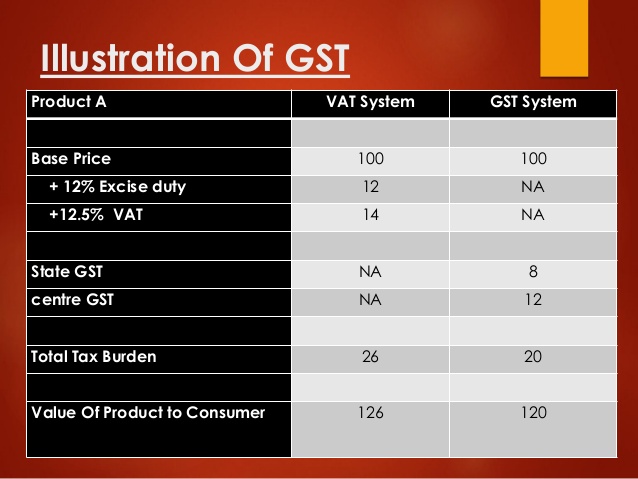
GST is a unified tax which is levied on: (i) goods; (ii) services and (iii) a mix of goods and/or services. Any supply of goods or services . .. ...
Read moreGST India Solution is an effort of firm of professionals who welcome implementation of GST. This is an interactiveplatformthat aspires to disseminate right knowledge to professionals, practitioners and public at large. This platform has beenfloatedbya firm of Chartered Accountants relentlessly working in field of direct and indirect taxes since early 1985.
READ MORE
Our core competence is statutory compliance, advisory, corporate tax planning and appellate matters of direct and indirect taxesandcorporate training sessions on GST.
The senior partner of the firm has to his credit several professional publications viz., Delhi Sales Tax Right to Use Goods Act, Delhi VAT, Maharashtra VAT, West Bengal VAT, Haryana VAT published by Taxmann. Madhya Pradesh VAT and Chhattisgarh VAT were published by Suvidha Law House, Bhopal. He has also addressed seminars on indirect taxes organized by professional bodies like ICAI, IMA, NIFM etc. and has also contributed articles on subjects of pro. . . . .
From 9th January 2017, the GST enrollment for service tax assessee shall start and which needs to be completed within a month till 31st January 2017.
read more
The existing taxpayers will have to get themselves enrol / register / migrate under Goods and Services Tax (GST) System in the month of November itself.
read more
If you are an existing taxpayer registered under Excise, Service Tax and State Tax Laws such as VAT, Entry Tax, Luxury Tax and Entertainment Tax, then you will need to enroll for GST online.
read more
It is very important to understand the registration procedure under GST because even the existing dealer will also have to apply for the GST registration online.
read more
GST is now a reality, and it is knocking the doors. This article answers the most important question which is in every bodies mind that who all are liable to register under GST?
read more
This article explains the importance of service tax registration when GST is on the doorstep. Under GST, every person being a service provider, a dealer, trader, manufacturer, Exporter, Importer etc will have to apply for GST registration.
read more
This article explains the registration process under the new Goods and Service Tax (GST) Act, 2016. The whole process under GST regime is also online. The structure of GSTTIN is also explained in this article
read more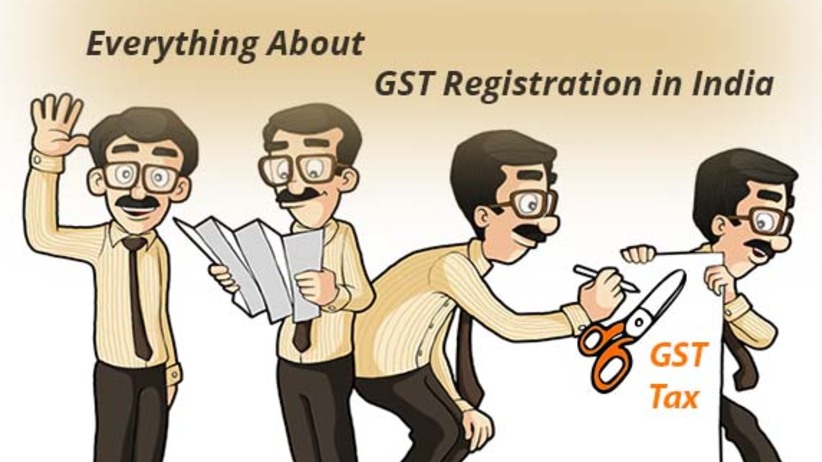
This articles describes the documents required for GST registration in India. The list of documents required for each form of business has been listed down separately for better clarity.
read more