


WHAT IS GST?
GST i.e.Goods and Service Tax is a unified tax that replaces several indirect taxesleviedby the Central Government and the State Government(s)....
Read more
|
CIRCULAR No. 20/2009-CUSTOMS
Dated : June 19, 2009
Subject: Disposal of seized / confiscated cylinders filled with refrigerant gases – regarding.
Attention is invited to the Board's letter vide F. No. 711/79/2000-Cus(AS), dated 26 th December, 2001, on the above subject. It has been brought to the notice of the Board that the field formations are facing certain difficulties with regard to disposal of seized / confiscated cylinders filled with refrigerant gases. Accordingly, the matter was taken up with Chief Controller of Explosives, Petroleum & Safety Organization,
2. As per Rule 3 of the Gas Cylinder Rules, 2004 (in supersession of the Gas Cylinders Rules, 1981), framed under the Explosives Act, 1884, no person shall fill any cylinder with any compressed gas or import, possess or transport any cylinder so filled or intended to be filled with such gas unless –(a) such cylinder and its valve have been constructed to a type and standard specified in Schedule 1 as amended from time-to-time by an order issued by the Chief Controller, (b) the test and inspection certificates issued by the inspecting authority in respect of cylinder and its valve are made available to the Chief Controller and prior approval of the said authority is obtained. Further, as per Rule 29 of the said Rules, no person shall import any cylinder filled or intended to be filled with any compressed gas except under and in accordance with the conditions of a licence granted under these rules and the relevant provisions of Foreign Trade (Development & Regulations) Act, 1992. Also, as per Rule 43 of the said Rules, no person shall fill any cylinder with compressed gas and no cylinder filled with compressed gas shall be possessed by anyone except under and in accordance with the conditions of a licence granted under these rules.
3. In accordance with the provisions laid down under the Gas Cylinder Rules, 1981, Department of Explosives had earlier issued Circular No. G.3 (17) 15 /98/I, dated 24-8-2001 and listed four firms to which such cylinders could be disposed of. Accordingly these four firms were listed, vide Board's instruction F. No. 711/79/2000-Cus (AS), dated 26 th December, 2001. The Chief Controller of Explosives,
1) M/s SRF Ltd., A-16, Aruna Asaf Ali Marg , Qutab Institutional Area, New Delhi-67
2) M/s Chemplast Sanmar Limited, 8, Cathedral Road, Chennai-600 086.
3) M/s Gujarat Flurochemicals Limited, A-6, Connaught Place,
4) M/s Navin Fluorine Industries Ltd., 7 th Floor, Mafatlal Centre, Nariman Point, Mumbai-86.
5) M/s BOC India Ltd., T-25, MIDC Industrial Area Taloja-410208, Navi Mumbai.
6) M/s Praxair India Pvt. Ltd., 8, Ulsoor Road Praxair House, Bangalore-560042.
7) M/s Stallion Enterprises, No.4, Orbit Industrial Estate, Chincholi Bunder Road Extn ., Off Maland Link Road, Malad (W) Mumbai – 400064.
8) M/s Refex Refrigerants Limited, 20, Mooker Nallamuthu Street, Chennai- 600001.
4. Accordingly, it is hereby directed that seized or confiscated cylinders filled with refrigerant gases viz., CFC-11, CFC-12, HCFC-22 and other ozone depleting substances as given in Schedule 1 of the Ozone Depleting Substances (Control & Regulations) Rules, 2000, may be disposed of to one of the above mentioned eight approved refrigerant filling plants, provided they are specifically permitted in writing to decant such gases in approved cylinders by the Chief Controller of Explosives. The intimation to this effect may be given to the Director (Ozone), Ministry of Environment & Forest, who will ensure that the corresponding quantity is accordingly debited from the prescribed quota of the concerned manufacturer.
5. A ny difficulty in the implementation of the aforesaid measures may be brought to the notice of the Board. All the previous circulars / references issued on the subject may be deemed to have been superseded.
F. No. 711 / 44 / 2007-Cus (AS)
(K. Ramakrishnan)
Deputy Secretary to the Govt. of
|
GST i.e.Goods and Service Tax is a unified tax that replaces several indirect taxesleviedby the Central Government and the State Government(s)....
Read more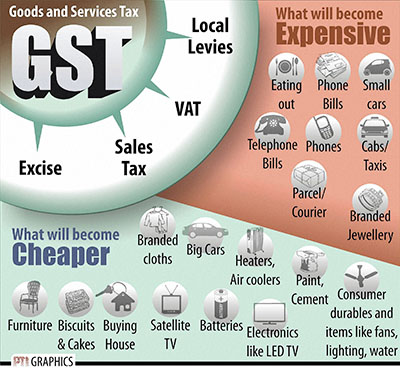
In pre-GST regime, goodswere liable to: (i) Excise Duty- on manufacture of goods; (ii) VAT/CST- on sale of goods; (iii) Entry tax- on ...
Read more
GST is levied on every taxable person. Taxable person means a person who carries on any business at any place in India. Such . ..
Read more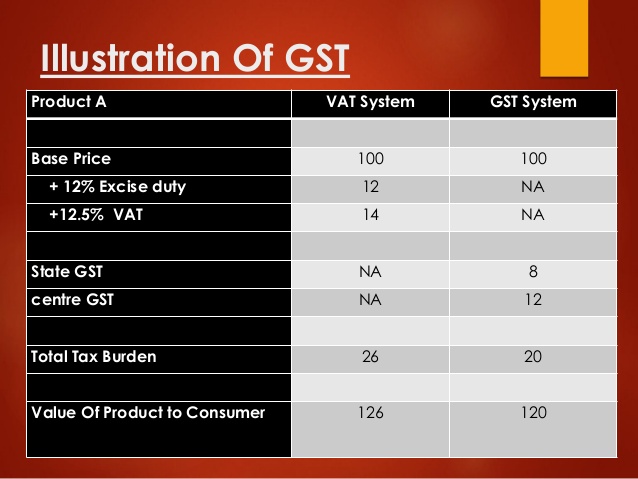
GST is a unified tax which is levied on: (i) goods; (ii) services and (iii) a mix of goods and/or services. Any supply of goods or services . .. ...
Read moreGST India Solution is an effort of firm of professionals who welcome implementation of GST. This is an interactiveplatformthat aspires to disseminate right knowledge to professionals, practitioners and public at large. This platform has beenfloatedbya firm of Chartered Accountants relentlessly working in field of direct and indirect taxes since early 1985.
READ MORE
Our core competence is statutory compliance, advisory, corporate tax planning and appellate matters of direct and indirect taxesandcorporate training sessions on GST.
The senior partner of the firm has to his credit several professional publications viz., Delhi Sales Tax Right to Use Goods Act, Delhi VAT, Maharashtra VAT, West Bengal VAT, Haryana VAT published by Taxmann. Madhya Pradesh VAT and Chhattisgarh VAT were published by Suvidha Law House, Bhopal. He has also addressed seminars on indirect taxes organized by professional bodies like ICAI, IMA, NIFM etc. and has also contributed articles on subjects of pro. . . . .
From 9th January 2017, the GST enrollment for service tax assessee shall start and which needs to be completed within a month till 31st January 2017.
read more
The existing taxpayers will have to get themselves enrol / register / migrate under Goods and Services Tax (GST) System in the month of November itself.
read more
If you are an existing taxpayer registered under Excise, Service Tax and State Tax Laws such as VAT, Entry Tax, Luxury Tax and Entertainment Tax, then you will need to enroll for GST online.
read more
It is very important to understand the registration procedure under GST because even the existing dealer will also have to apply for the GST registration online.
read more
GST is now a reality, and it is knocking the doors. This article answers the most important question which is in every bodies mind that who all are liable to register under GST?
read more
This article explains the importance of service tax registration when GST is on the doorstep. Under GST, every person being a service provider, a dealer, trader, manufacturer, Exporter, Importer etc will have to apply for GST registration.
read more
This article explains the registration process under the new Goods and Service Tax (GST) Act, 2016. The whole process under GST regime is also online. The structure of GSTTIN is also explained in this article
read more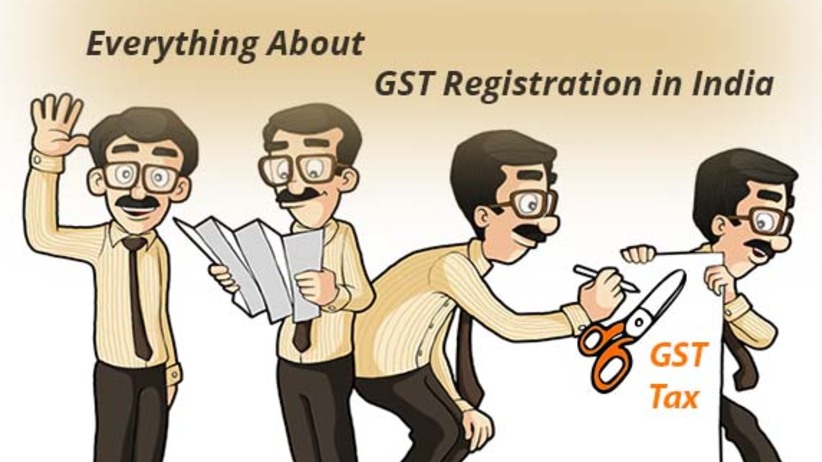
This articles describes the documents required for GST registration in India. The list of documents required for each form of business has been listed down separately for better clarity.
read more